It feels like forever since I have posted on Orlando Bonsai. I have been creating instructional bonsai videos and it has pretty much taken all of my free time to do. However I want to get get back to updating my site with still pictures of my trees so that I can capture the progression of their development. Hopefully in the next couple of weeks aI can get my trees cleaned up enough to do some nice shots.
The following video shows the steps I take to redefine my trees and get them better looking every year.
Well the 2010 Flower and Garden Festival started yesterday at Epcot in Orlando Florida. I must say that I am both happy and exhausted! It is a lot of hard work to get that show organized, but it is so rewarding. I fyou are going to be in Orlando be sure to check it out as it runs through May 16th.
Here are some highlights
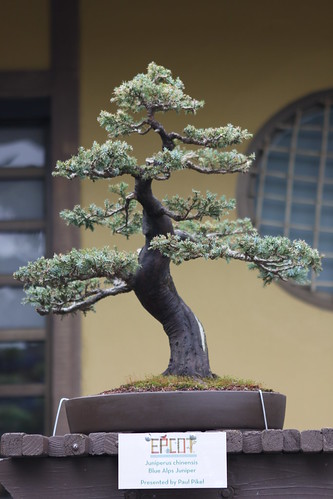
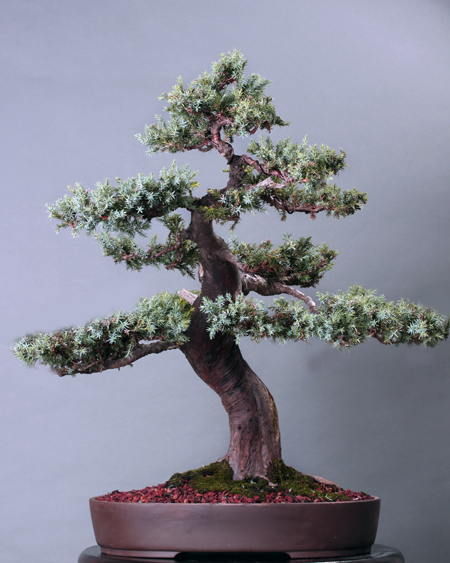
Paul Pikel’s Blue Alps Juniper
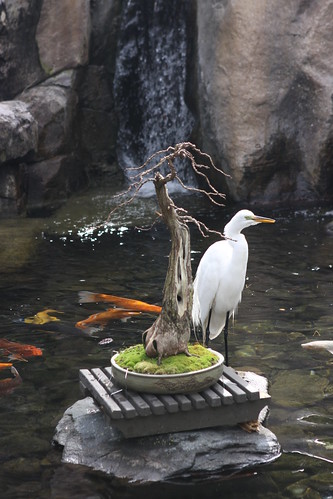
Louise Leister’s Bald Cypress with visiting Herring
Jarbas Godoy’s Australian Pine moving into position
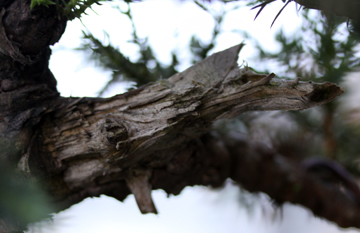
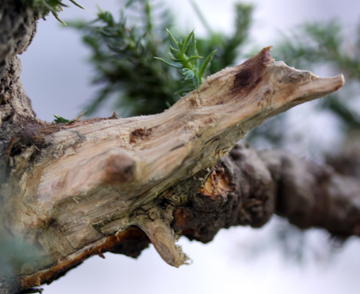
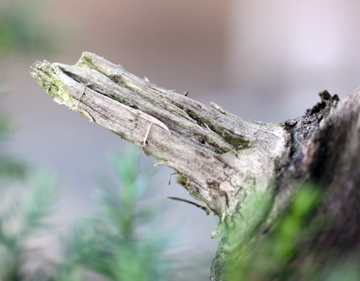
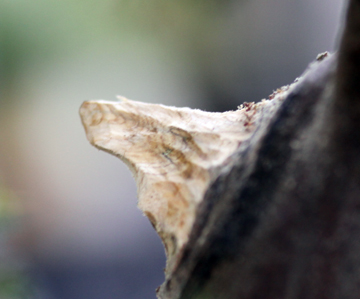
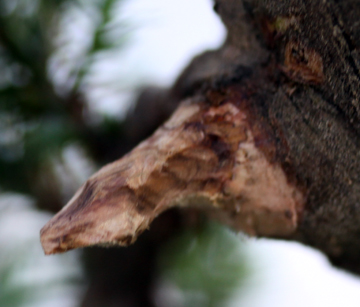
Sometimes it’s hard to represent nature in a bonsai due to un-natural cuts. However with a little work you can create dramatic aging of your trees to look very natural. My Blue Alps Juniper had a lot of branches removed with the thoughts of adding jins to help with the over all look of the finished bonsai. I really enjoy the color contrast of the reddish bark, bluish foliage and the white jins.
I had removed these branches last year, so the wood was completely dried, and ready for carving. The following images represent the before and after carving. Please keep in mind that Lime Sulfur will be applied after the final carving to bleach the wood white. I used a Dremel tool for the carving and sanding of the jins.
After consulting with a few other bonsai artist, in particular Mike Rogers. I found that the pot that this tree was potted in was too “Heavy” mass-wise for the tree. In Bonsai, everything is about perspectives and relationships. The overall height of a tree, is six times the width of the trunk at the base of the tree. The first branch should be located one third of the overall height of the tree. The width of the bonsai pot should be two thirds the height of the overall tree. The depth of the pot should be no more than then the thickness of the trunk.
I know that this seems to be a lot of math for such an artform. However the brain automatically makes these calculations and makes sure that all parts of the tree are in perspective as they relate the tree parts. It is that immediate feeling one gets when they look at art, a human face, or even a structure. If one aspect of the object are out of balance it can cause the viewer to see weakness, unbalance, or dislike for the object.
So with that said, the pot that I had this tree in before was too wide, and too deep. The color was good though, and that is why I used it in the first place. The tree is now potted into a new Tokoname pot that is with in scale and the color, although darker, is an accpetable finish and color for Junipers.
New Pot for Blue Alps Juniper
This tree still requires plenty of branch work, but it will come in time.